Networking Event 3: Lifelong Learning
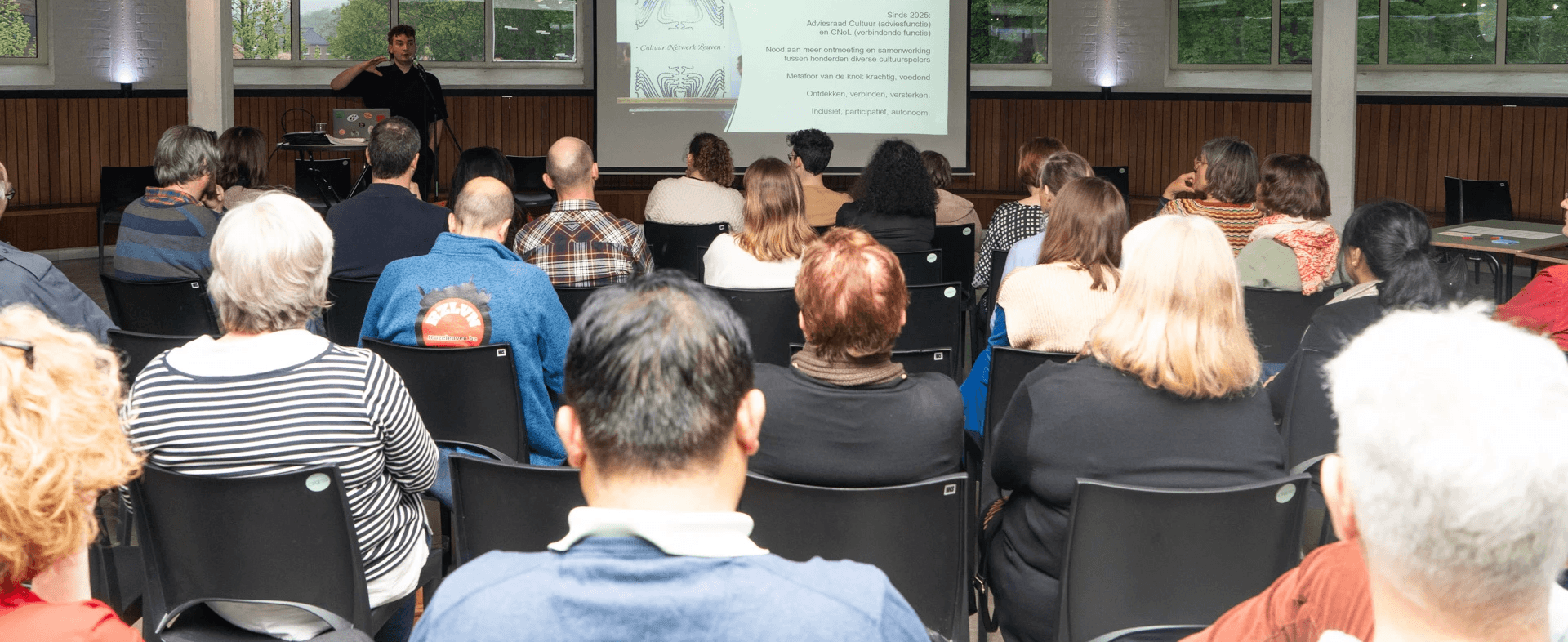
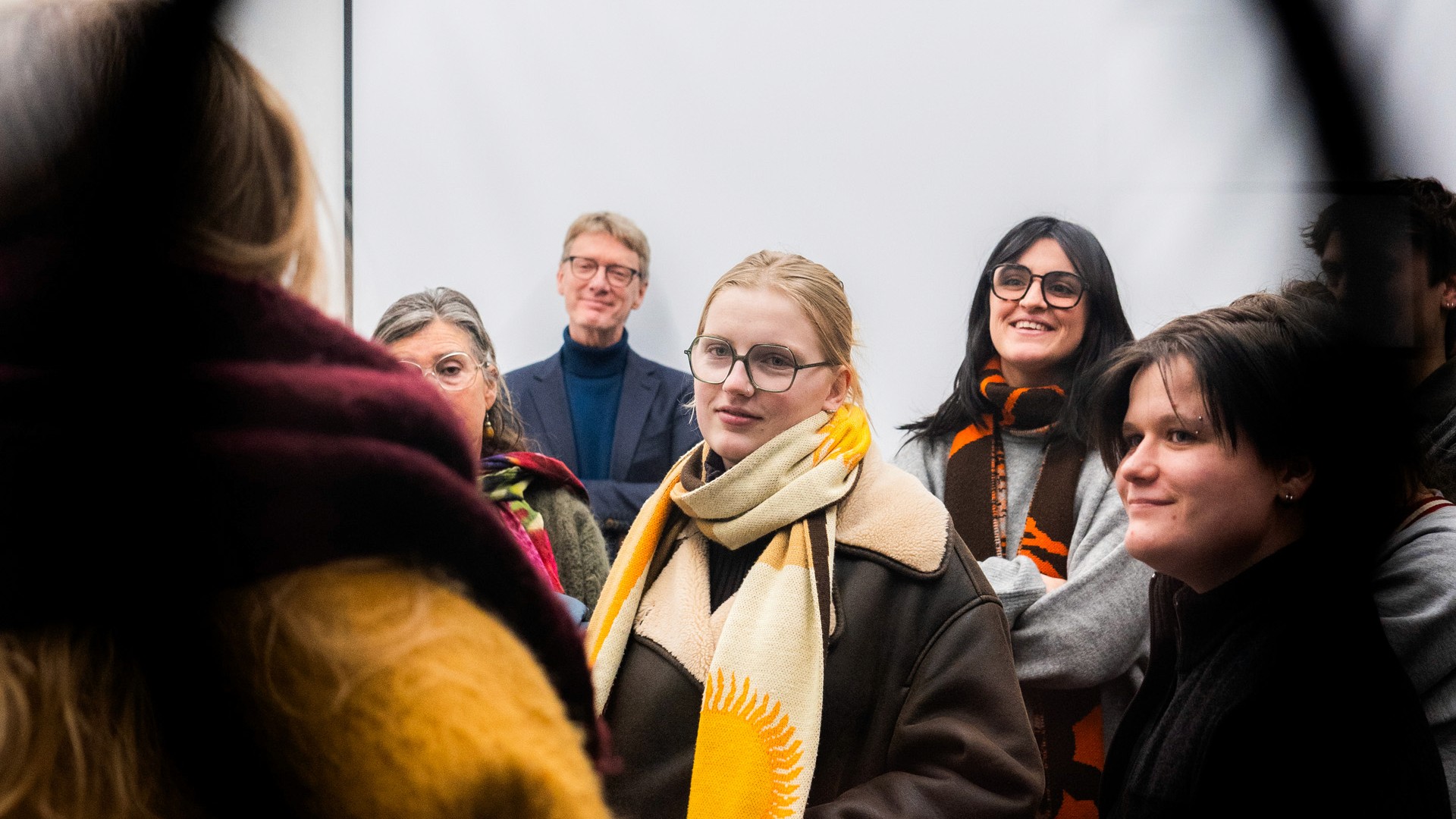
On April 21, the Culture Network Event took place at LUCA School of Arts, Campus Lemmens. Cultural professionals, volunteers, artists, and representatives from organizations across Leuven came together for an evening of networking, knowledge sharing, and inspiration.

"Networking moments like these show how much knowledge, commitment, and passion there is in our sector. I hope everyone not only gained new insights, but also made new contacts that will continue to grow after this evening.", Georgy Chtchevaev, coordinator of CultuurNetwerk Leuven.
The evening kicked off with a walking dinner, where participants could catch up and make new contacts in an informal atmosphere. That networking segment immediately set a strong tone for the rest of the evening.
During the joint plenary session, attendees received a status update on several important files within Leuven's cultural landscape. For instance, CultuurNetwerk Leuven provided an update on ongoing initiatives and future plans. The Cultural Advisory Council also explained its work and focus areas, while LOV2030 introduced its new management. Finally, participants gained insight into the workings of LUCA School of Arts and the role of Campus Lemmens within Leuven's cultural and artistic ecosystem.
During the second part of the evening, participants could choose from five thematic sessions addressing current challenges within the cultural sector.
More affordable, shared space: is it possible?
This session combined a status update with an exchange of experiences from the sector. The cultural infrastructure expert from the City of Leuven provided an overview of the actions undertaken in recent years regarding infrastructure. There is an increasing focus on the shared use of existing infrastructure, cultural organizations are supported in their search for space, and opportunities are being explored both within and outside the municipal property portfolio.
Participants were given an inside look at several ongoing and future infrastructure projects in Leuven, including developments at the Paul Van Ostaijen site, the Wijgmaal station building, the Minnepoort, and the Centrale Werkplaatsen. In each case, opportunities for shared use and broader accessibility for the cultural field were examined.
During the interactive part of the session, participants exchanged ideas about difficulties and opportunities within infrastructure.
Key insights
Affordable cultural space remains a major challenge for many organizations.
Shared use of infrastructure is becoming increasingly important, both locally and at the Flemish policy level.
Matchmaking between organizations and space owners often yields more results than merely building new infrastructure.
A structural dialogue between the sector and (local) government is desirable and offers opportunities.
Would you like to contribute to this search?
Contact info@cnol.be to receive all information regarding the Infrastructure Working Group.
How do I make my application stand out?
Stefanie Lambrechts shared practical tips and insights for writing strong grant and project applications. The focus was not on the formal grant conditions, but on how to structure an application clearly, convincingly, and distinctively. Participants were given concrete tools to increase their chances of a successful application.

Social Media Workshop for Associations
Using concrete examples and practical experience, participants were guided through the basic principles of a strong social media strategy.
The session emphasized that successful social media is not primarily about posting as much as possible, but about relevance, recognizability, and interaction. It also examined the differences between the main platforms and how organizations can deliberately use their channels according to their objectives.
An important recurring theme was the importance of knowing your target audience. Participants were encouraged to first think about who they want to reach before deciding what content to create. In addition, attention was given to the importance of personal stories, strong visuals, and short videos, which generally perform better than generic or highly promotional messages.
The algorithm was also discussed. Factors such as interaction, the type of post, and posting times play an important role in the visibility of posts. Participants received various tips to increase reach and engagement, including focusing on events, current affairs, behind-the-scenes stories, and actively engaging in conversations with their audience.
Key Insights
Know your target audience and tailor your communication to them.
Make your communication personal and human.
Use high-quality photos and short videos instead of sharing flyers or text-heavy images.
Combine your own news with inspiring sector information and lighter content.
Tap into current affairs and relevant events whenever they align with your activities.
Use stories and event features to increase your reach.
Social media is a conversation: respond to your audience and encourage interaction.
Work consistently and recognizably, both in terms of content and visual style.
Money, Money, Money: Funding for Cultural Organizations and Practices
Cultuurloket provided an overview of various funding opportunities for cultural projects and organizations. Both subsidies and alternative forms of financing were examined. The session offered inspiration and practical tips for amateur arts organizations, small non-profits, and cultural initiatives seeking to strengthen their financial foundation.
Explore this topic yourself via Cultuurloket's handy landing page: https://www.cultuurloket.be/kennisbank/je-financieringsmix

Removing barriers: inclusion and access to the cultural sector
During this session, Amani El Haddad addressed how cultural organizations can embed inclusion and accessibility not only in projects, but also in their daily operations. Inclusion is becoming increasingly important within grant schemes and policy frameworks. Governments increasingly expect organizations to demonstrate how they address diversity, participation, and accessibility, both for their audiences and within their own operations.
Drawing on experiences from the Ghent Arts Consultation (GKO), it was explained what structural work on inclusion can look like. Several initiatives were discussed: a diversity charter, learning networks, self-evaluations, and coaching trajectories for organizations. The message was clear: inclusion is not a one-off project, but an ongoing learning process in which organizations continually question themselves critically.
An important focal point was the role of power and decision-making within organizations. Who makes decisions? Who sets the agenda? Who gains access to resources and opportunities? Sustainable change begins with making these often invisible structures visible and open to discussion.
Key insights
Inclusion goes beyond physical accessibility and also touches on representation, participation, decision-making, and power relations.
Structural change begins with self-reflection: where does your organization stand today and what barriers still exist? An organizational scan or self-evaluation can help map strengths, blind spots, and priorities.
Diversity and inclusion require attention across the entire organization, from staff and board to partnerships and programming.
Inclusion requires ongoing attention and regular dialogue, not just standalone actions or temporary projects.
Authentic interest, reciprocity in collaborations, and a welcoming attitude are crucial prerequisites for inclusive operations.
There is no one-size-fits-all approach: every organization must find an approach that aligns with its context and audience.
Inclusion is not a checklist, but a long-term process in which organizations continue to learn, experiment, and engage in dialogue with their environment.